Headlights and turn signals share the same electrical network, so flickering usually means the voltage is dropping or the current is taking a messy path to ground. The turn signal circuit is a repeating load, on-off-on-off, which makes small electrical weaknesses show up in a very visible way. This is why the lights can look fine most of the time, then act up the moment the blinker starts cycling.
It’s an electrical clue worth taking seriously.
Electrical Load And Voltage Drop Basics
When you switch on your headlights, the system draws a steady current. When you add the turn signals, you add a pulsing load that makes system voltage rise and fall slightly with each blink. In a healthy system, that change is small enough that you never notice it, because wiring, grounds, and connections carry current without significant resistance.
Flicker happens when resistance is too high somewhere, or when a ground path is weak and forces current to backfeed through another circuit. The result is a momentary dip that the headlight bulbs or LED drivers reveal immediately. Think of it as the system briefly struggling to supply both circuits cleanly.
Weak Grounds And Shared Ground Points
Ground problems are the most common reason headlights flicker with turn signals. Many vehicles use shared grounding points for front lighting, so if one ground is corroded or loose, both the headlight and the turn signal can be affected. The lights still work, but the voltage they see is unstable.
A weak ground can also cause odd side effects like a turn signal indicator glowing faintly when it should be off, or a headlight that changes brightness depending on what other accessories are on. We see this a lot after years of heat, moisture, and vibration working on ground lugs and connectors. Cleaning and tightening the correct ground point often fixes the issue without replacing expensive components.
Battery Terminals And Main Connections That Add Resistance
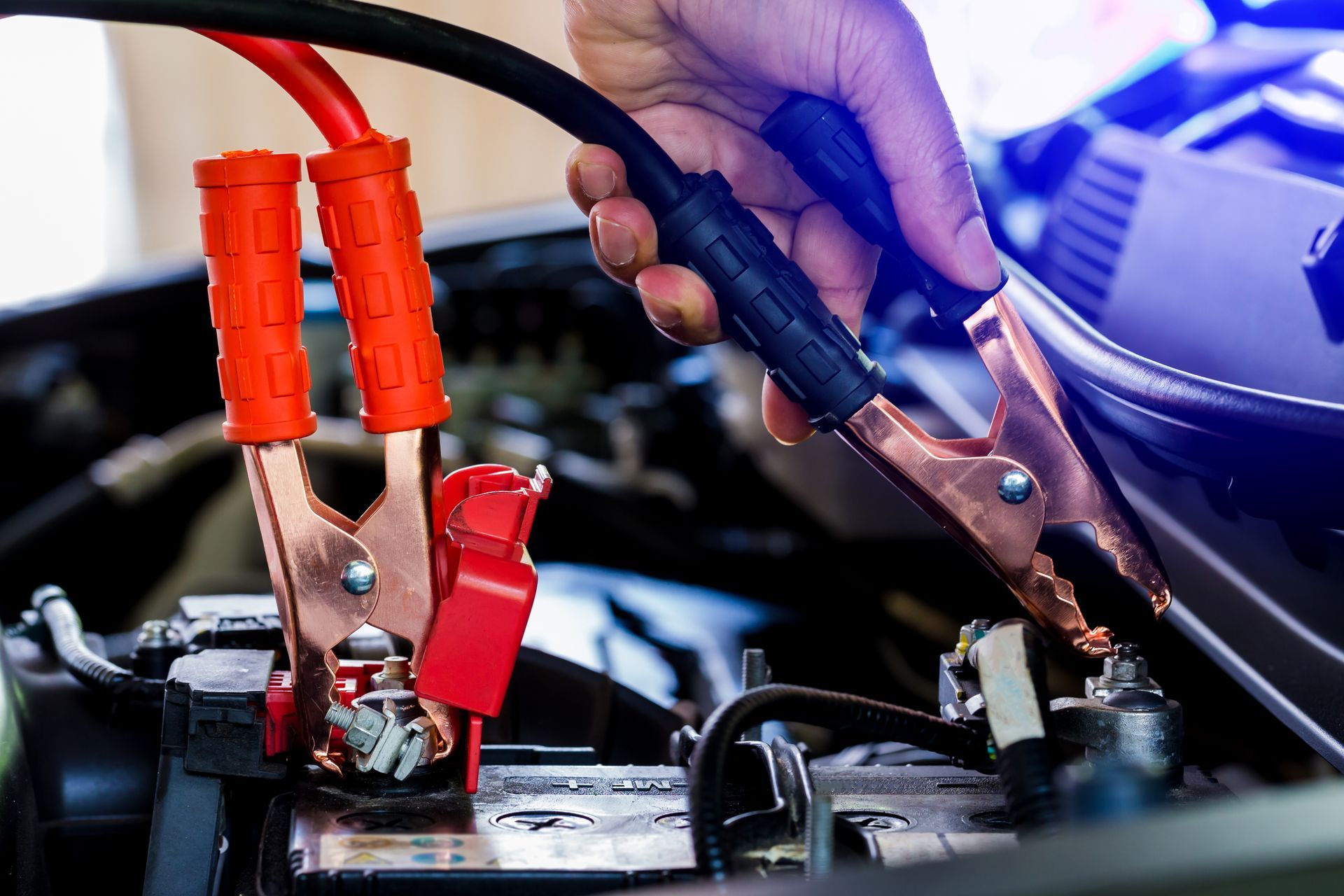
Poor battery connections create a voltage drop for the whole vehicle, and a blinker load makes it obvious. If the terminals are corroded, slightly loose, or the cables have internal corrosion near the ends, the voltage can dip each time the turn signal draws current. That dip can be small on a meter and still look dramatic in the headlights.
The main power and ground cables matter just as much as the battery posts. A tired connection at the chassis ground, a frayed engine ground strap, or a loose connection at the under-hood fuse box can cause the same flicker. This is why a proper check includes looking beyond the battery itself.
Alternator Output And Regulator Control Issues
An alternator that is struggling to maintain steady output can cause lights to pulse, especially at idle. Turn signals add a repeating load, and if the alternator’s regulator is slow to react or the alternator is weak, the system voltage can swing enough to show up in the headlights. Some vehicles show the problem only at stoplights, then it improves as RPM increases.
A weak alternator does not always announce itself with a warning light right away. The first signs are often electrical behavior that feels slightly off: dimming, flicker, or accessories that seem less consistent. Testing charging voltage and ripple under load is the clean way to confirm whether the alternator is steady or noisy.
Turn Signal Circuit Problems And Bulb Issues
Sometimes the turn signal side is the trigger. A failing bulb, wrong bulb type, or corrosion in a turn signal socket can create extra resistance and heat. That can change current draw and create a weird electrical feedback effect, especially if the socket ground is compromised. You can also see this when one side blinks faster than the other, which is a sign the circuit is not seeing the expected load.
On vehicles with LED conversions, mismatched bulbs or poor-quality resistors can create flicker patterns that look like a charging problem. If the headlight flicker started right after a bulb change, that detail matters. The fix may be as simple as correcting the bulb type or repairing the socket connection.
Switches, Relays, And Control Modules
Modern lighting is often controlled through relays and body control modules rather than simple direct wiring. A worn headlight switch, a relay with burned contacts, or a module with a poor internal connection can create intermittent voltage delivery. When the turn signals cycle, that added activity can expose a weak relay or connector that was barely hanging on.
If the flicker happens only in one headlight, or only on one side, that points more toward a localized wiring or connector issue. If it happens evenly on both headlights, main grounds, battery connections, and charging stability, move back to the top of the list.
Safe Checks That Help Before You Schedule Service
You can gather useful clues quickly without pulling the front end apart. The goal is to identify whether this looks like a connection problem, a charging stability problem, or a socket and bulb problem.
- Watch the flicker pattern: both headlights or just one side
- Try it at idle and again at a slightly higher RPM and note any change
- Check battery terminals for looseness or heavy buildup
- Turn on another load like the rear defrost and see if flicker worsens
- Check for fast blinking on one side, which can point to bulb or socket issues
If you want the issue fixed efficiently, bring these observations to an inspection and avoid swapping bulbs repeatedly without addressing the wiring and grounds. This is one of those problems where regular maintenance on connections and grounds prevents repeat electrical headaches.
Get Electrical Diagnostic and Repair In Wichita, KS With Auto Smart
Headlight flicker with turn signals usually comes down to voltage drop, weak grounds, or unstable charging, and it can be confirmed with straightforward testing.
Schedule your service or visit
Auto Smart in Wichita, KS, when you want the real cause pinpointed and corrected without chasing random parts.